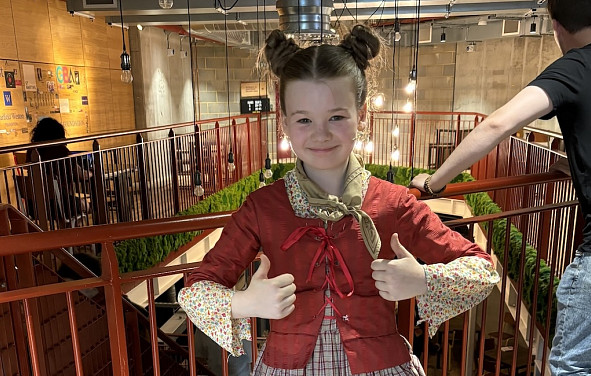
Hello! My name is Arya, and I’m 17 years old. Hi, I’m Zoë and I’m 17.
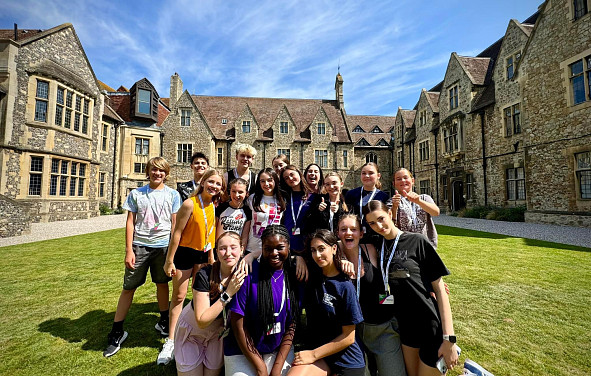
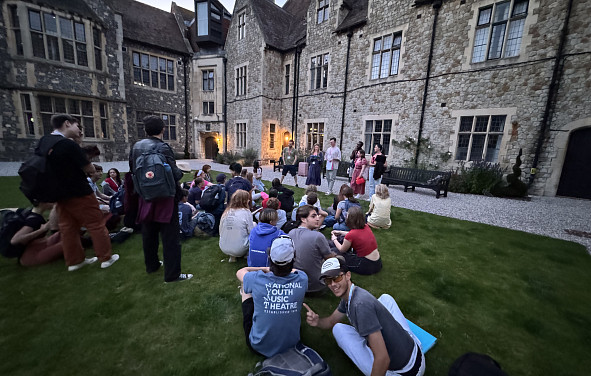
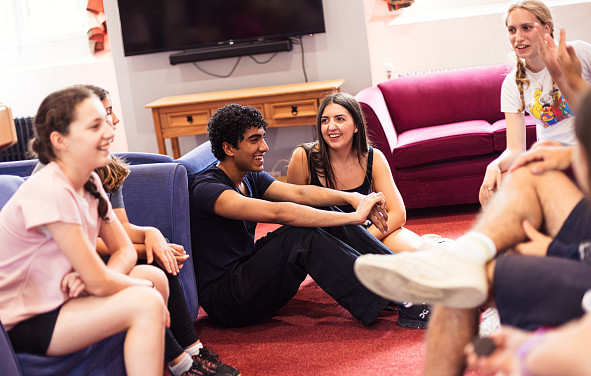
Arya and Zoë both attended an NYMT workshop in the summer to complete the residential part of their ‘Gold’ award. The nature of the workshops means they are perfectly suited to fulfil the criteria of this section. The main boxes you must tick off in this section are as follows:
1. You must complete the residential at a qualifying centre with others you have never met before.
2. There must be an assessor present to sign the section off.
3. The candidate must be away for a minimum of five days and four nights.
Zoë: DofE is a scheme set up by the former Duke of Edinburgh to give kids the opportunity to develop life skills like teamwork and independence, whilst also learning new things. You have to do one hour a week each for a physical activity, a skill and then volunteering. Plus, you do an expedition and then for Gold – which I’ve just done, having done my Silver in Year 10 – you also have to do a residential course at a qualifying centre. I did the NYMT residential MT skills course to complete this part of the scheme – I love singing, dancing and acting so it was an obvious fit for me. I want to have a career in performing arts and I thought NYMT would be a great experience – essentially ticking two boxes!! Some good prep towards uni auditions, a fun week and DofE Gold completed!! Tick!
Arya: If I were to explain the Duke of Edinburgh’s Award to someone who had never heard of it before, I’d begin by saying it is a means for young people to gain key transferable skills that will strongly aid them in any walk of life, be that something like theatre or even something like medicine! It has been designed in a way to boost the maturity and experience of young people beyond what you are taught in school. It is divided into three levels: Bronze, Silver and Gold. You do not have to complete all three, but most start with Bronze and work their way up to Gold. That is not to say, however, that you cannot skip straight to Gold or do only Bronze; each award has its own age ranges. Anyone 14 and above can complete the Bronze award, anyone 15 and above can complete the Silver award, and anyone 16 and above can complete the Gold award. Anyone who would like to complete any award, however, must do so before their 25th birthday. Many schools will offer the Bronze award to Year 9 students or above, the Silver to Year 10 or above, and the Gold to Year 11 or 12. Each award is divided into sections: the volunteering section, the skills section and the physical section, plus an expedition and, in Gold, a residential. For Bronze you must do a minimum of three months of volunteering, skills work and physical work, with one of them of your choice being six months minimum. For Silver you must do a minimum of six months volunteering, and either six months physical and three months skills or six months skills and three months physical. Finally, at Gold you must complete a minimum of 12 months volunteering and then either 12 months physical and six months skills or 12 months skills and six months physical. In each you also have to do an expedition, which most schools offer, but you can do privately as well with other people. At Bronze, this is two days of walking with one night of camping; at Silver, three days of walking with two nights of camping; and at Gold, four days of walking with three nights of camping. Additionally, in Gold alone, you must complete a residential spanning a minimum of five days and four nights with people you have not met before. I have completed both my Bronze and Silver awards and am in the process of signing off my Gold award, having completed all sections! I decided to use NYMT in my DofE journey since it aligned with the criteria of a DofE Gold residential, as well as being something I loved! I have had a strong passion for theatre my whole life and found the DofE an excellent way to pursue this passion.
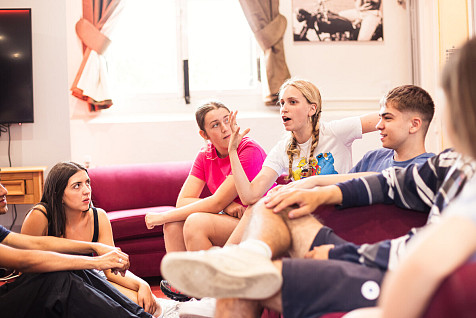
Arya: I learnt many things from NYMT in terms of individual performance and performing as a group. The lessons we were taught were very detailed. For example, in singing we learnt about tilt, larynx height, attractor state, constriction and retraction and more. These were all to elevate our technique, but we also learnt about how to work with each other in ensemble numbers to produce a balanced and better sound.
Zoë: I would say I was already doing a lot of triple-threat lessons, performances and competitions in my home life, but I think NYMT gave me an opportunity to pull it all together and have some outside feedback from industry professionals. I also enjoyed singing harmonies for the final performance to parents and expanding my repertoire of songs. I also really valued the feedback of staff when I got the chance to perform my proposed audition piece for university. Again, it was great to test that out in front of a professional choreographer and an ex-panel member from Arts Ed!!
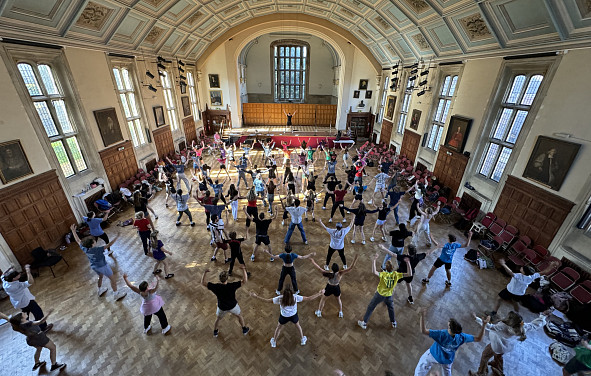
Arya: In acting we also learnt lots, such as emotional memory, and even completed activities such as writing our own monologues based on music played to us. Our dance activities were very full on, and our teacher really made us work! But it meant our performance was of a much higher level, and we all improved our technique in doing so.
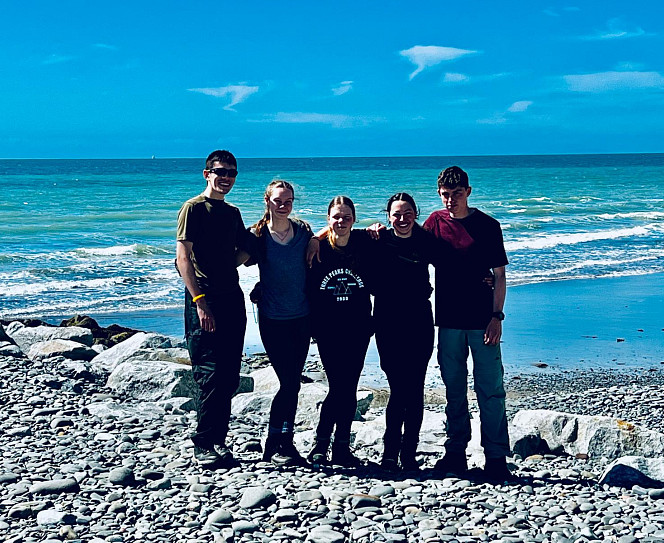
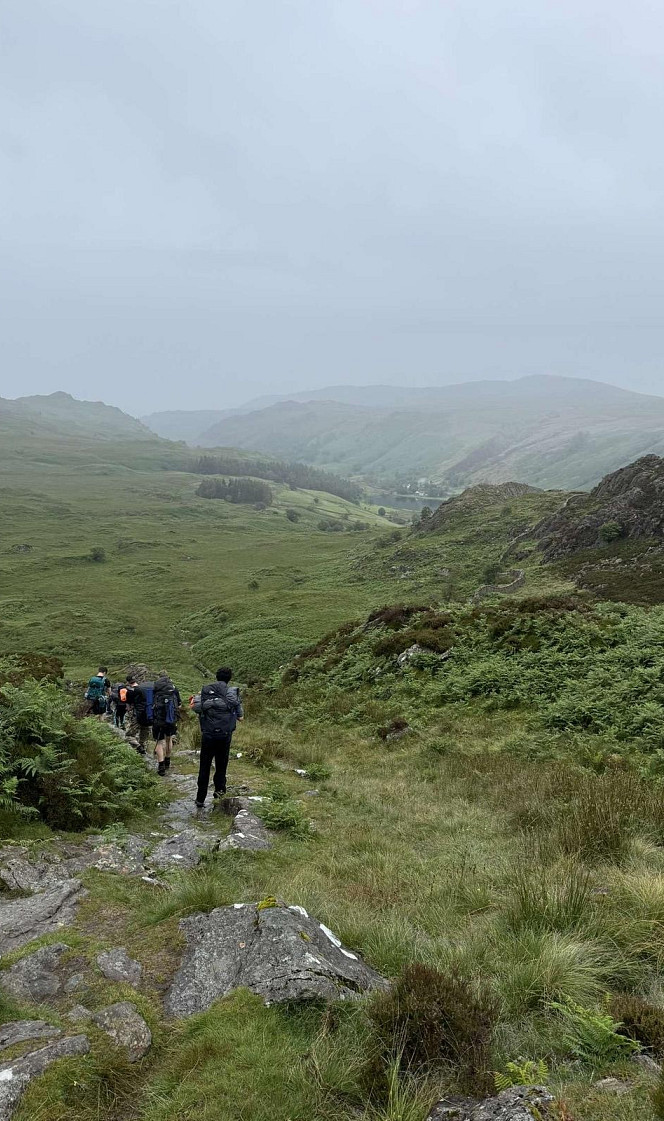
Zoë: For the Skill, I did singing lessons. For the physical, I did dance classes, and for volunteering I have been teaching dance once a week to primary school children. I did a practice and a qualifying expedition in May and August – each in a different part of Wales. That was seriously incredible. I have so many, many hilarious memories from those trips, and it’s probably the part I’m most proud of completing. We walked over 50 miles on each trip from the middle of Wales – ending up on the beach on the west coast. We carried all our food, cooking and sleeping equipment on our backs and, although it may sound cringey, I can honestly say I had the best time and came home with a newfound sense of respect for nature, which surprised me.
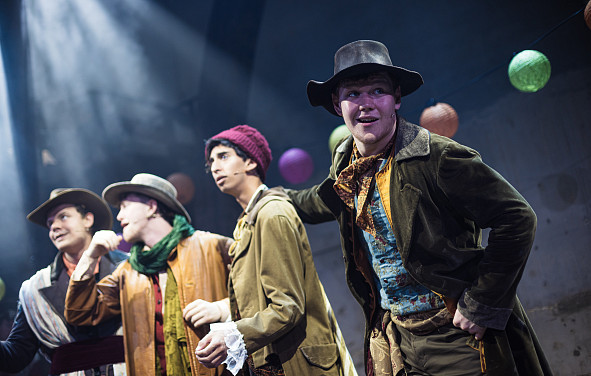
Arya: One specific skill I have learnt from my time at NYMT is the use of facial features in acting. A major part of our showcase at the end of the week was a scene from the Sondheim musical ‘Sunday in the Park with George’, in which I played a character named the boatman, who was a character within a painting, meaning I had to stay frozen still the entirety of the scene. Without being able to make use of my body, I had to pour all my focus into acting with purely facial expressions, as well as, of course, my diction and accent; this was much trickier than expected. It was difficult to find a balance between not using enough facial expression and overdoing it; using just the right amount took lots of practice, but I am extremely glad I learnt how to, since it has now improved my acting overall, including in my songs, not just in scenes!
Zoë: The NYMT course definitely pushed me outside my comfort zone, but in a different way to the expedition. The most challenging bit for me was just joining up with a group of total strangers. I didn’t know the students or the staff, and I was staying at a school I had only visited once before. But very quickly you were made to feel welcome, and I settled in. I think I got confidence by performing in front of everyone in an unfamiliar environment because the staff were so enthusiastic, and I saw that others in the group were also both a bit nervous initially but also talented. So I felt like I was with people who were experiencing things that were similar to me.
Zoë: My biggest challenge was probably time management!! Planning and fitting it all in around A levels and my hectic dance/drama/singing schedule! But I am so, so glad I did it. It was absolutely fantastic, and I’m really looking forward to visiting Buckingham Palace to receive my Gold Award!!
Arya: Personally, I did not face any challenges in combining my NYMT experience with my DofE work. I felt the two aligned perfectly and did not get in the way of each other at all, making it easy and stress-free for me to complete in that regard.
Zoë: I think it was really important initially that I got my group together for the expedition. That had to be booked six months ahead at least, and my five friends were equally busy in their lives, so finding dates that fit everyone was important to do early. The solo activities can then be done by each of us individually and at our own pace.
Arya: A personal achievement of mine that I am proud of from when I was at the workshop is when I sang ‘Bring Him Home’ in front of everybody and a panel of judges. That day, we were doing masterclasses, which can be thought of as mock auditions, where we individually performed in front of the entirety of the cohort, including our teachers, who acted as judges. Many sang, acted and danced individually, in want of feedback, and performed incredibly. When it came to my performance, I decided to sing ‘Bring Him Home’ from Les Misérables, which I had sung in my Grade 8 in musical theatre and achieved full marks in. I was thrilled to perform in front of dozens of like-minded people my age and showcase my passion, and was extremely happy to receive praise from everyone once I had finished, as well as constructive criticism from the judges.
Zoë: A favourite personal achievement/highlight was performing my uni audition piece for the panel and getting some exciting and enthusiastic feedback!!
Arya: Coming to NYMT, I quickly realised that it was no ordinary experience, in the sense that I felt as though I had been dropped into an ocean of talent. I attend a performing arts school and have been involved in many musical events for years, and yet I was astonished by the sheer level my peers performed at. I witnessed immaculate dancing, flawless acting and elegant singing. However, I did not feel intimidated, or as though any of us were divided by competitive nature. In fact, the individual drive from everyone present, to push their boundaries, showcase their abilities and hone their performing skills, led to a mutual interest, as a whole cohort, to make the most out of the experience and enjoy it to the fullest. I worked with peers from a wide variety of backgrounds; however, we were all connected by our eagerness to perform and learn. The environment at NYMT was such that it was easy to socialise with one another and bond quickly throughout the week.
Zoë: I think I found the talent and enthusiasm for musical theatre higher than what I’ve experienced before, so I loved that. The bar was high without being scary.
Arya: Our teachers were also brilliant at making each of our activities entertaining and fun to take part in, without sacrificing quality or efficiency in the process, and are a key reason as to why we were able to work so well together. I learnt a lot from collaborating with my NYMT peers about collaboration with others in general. I had never met any of these people, and yet we gelled seamlessly, leading to a successful showcase by the end of the week, as well as strong friendships we hadn’t imagined would be formed before. In particular, I learnt the importance of communication with others, even in an environment you may not be familiar with. By speaking to people, asking questions and showing active interest in everything I did at the workshop, I made things happen, such as making friends, improving my own skills and enjoying my time, as it would be a shame to waste it.
Zoë: The staff were really positive rather than critical. Not sure why that surprised me, but I suppose I had preconceptions that ended up not being true! They were aspirational for every one of us. And it wasn’t intimidating.
Arya: What surprised me about my NYMT experience is how I bonded with others at the workshop. If someone had told me prior to attending that I would make some of my closest friendships within the span of five days, I would’ve thought they were delusional. However, during my time there, and then afterwards, I came to the realisation that it was truly a life-altering experience. The time I spent with my NYMT peers is now something I deem precious to me and appreciate beyond anything. I keep in regular contact with many of those I met at the workshop, and we all agree on how glad we are to have met each other, and how unexpected and surreal it felt to have done so.
Zoë: It’s given me more confidence in the run-up to uni auditions. And I hope it will look great on my CV too that I have sought out different theatrical experiences.
Below: Zoë and Arya on their DofE expeditions

Zoë: It was cool working with industry professionals. It was good to try out audition pieces on them.
Arya: The DofE award is an excellent way to showcase your teamwork and leadership abilities. For those who want to pursue theatre, both of these qualities are essential. They are transferable skills, and so regardless of where you apply, be that to a school, college, university or job, they will be considered before handing out any offers. In that light, DofE is a brilliant way to prove you have these qualities. Experiences such as the residential, volunteering and the expedition paint environments that force you to develop these qualities, whether or not you notice when completing them. Many learn valuable lessons from these experiences, which they carry forward for the rest of their lives; it’s what makes the DofE such an esteemed award. Anyone who wishes to have a future in theatre will find said lessons very valuable, as it enhances your social skills, maturity and ability to take on challenges and adversity. As well as teamwork and leadership, which are transferable skills applicable to any walk of life, there are also more targeted benefits for theatre, these being the core three sections of volunteering, skills and physical. Each section, if planned well, can be extremely useful for a future in musical theatre. Volunteering must be done for a minimum of three months at Bronze, six months at Silver and 12 months at Gold. This is a great opportunity to offer your services at a place whose focus is performing arts, but also to learn the ins and outs of that place whilst you are there. I, for example, did my volunteering at my performing arts school, Stagecoach, when I was doing my Bronze and Silver, and then at my school’s music department whilst doing my Gold. Doing this allowed me to understand much more about teaching in performing arts, which many who opt to pursue a career in musical theatre take on as a side profession in between jobs. Additionally, I learnt lots about stage management and various other behind-the-scenes processes that go into putting on a production or showcase. Extra understanding, such as this, is a great way to have your foot in the door when pursuing musical theatre. It goes without saying that the skills section is a brilliant way to enhance your core disciplines in theatre. I chose singing to complete my skills section throughout Bronze, Silver and Gold. Not only was this essentially a free sign-off, since I already sang for an hour a week, but it also meant that I kept singing, and by doing so consistently, I achieved a distinction in my Grade 8 in singing by the end of my Gold award. Of course, you do not have to be doing grades in any skill to sign off the section, but it is an added incentive. If you wish to pursue theatre, singing, acting, dance (although this can also be used in physical, so you may wish to do that instead) and instruments are great ways to complete the section and gain something from it that supports your theatre journey. It is, in essence, you being awarded for doing something you may likely already be doing, or for simply doing something you love! In the case that you would like to pursue musical theatre but don’t have any experience in the arts, this is also a brilliant opportunity for you to start, and work on your core disciplines. Finally, the physical section, which involves any physical activity. You could use this section simply for staying fit or for your own benefits, but it is also a means for you to enhance your dancing skills, as this is considered to be a physical activity. In theatre, dance is considered to be one of the three core disciplines and is extremely important on stage; many roles you wish to play will involve lots of dance, and even more so for ensemble roles. Therefore, it is a very good idea to get consistent dance practice embedded into your schedule, and the physical section is the perfect way to do that. The entire award can be moulded into a tunnel leading to whatever career you’d like to pursue, and theatre is no exception.
Zoë: If someone is thinking of using NYMT for their DofE, I’d say it’s a really good match, so go for it! And it was good fun too.
Arya: In my opinion, NYMT and the Duke of Edinburgh’s Award fit like a lock and key. They complement each other astonishingly well, as they are both aimed at the development of young people, in both specific and transferable skills. For anyone wishing to complete their DofE award, I would strongly encourage them to use NYMT to do so, and for those planning on participating in an NYMT workshop, I would also encourage them to take on the DofE award. They are both suited to support each other.
Zoë: Staying away from home with strangers felt like a big deal to me. But it wasn’t at all once I actually got there. So try and step over any nerves and focus on the fact that you get to sing and dance for a week with interesting people, and I’m sure you’ll love it. So in that sense it presented different challenges to the other elements of Gold, and it all fit together really well.
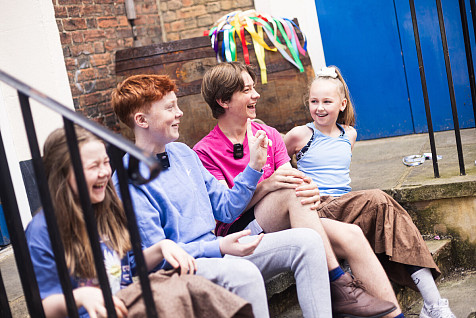
I would strongly recommend NYMT to any parent considering this kind of event for their children, especially for the DofE Gold residential component. From the start, the process was quite easy and straightforward once we engaged with NYMT. Pastoral care is an important factor when evaluating a residential programme for kids, and we had peace of mind knowing that everything was professionally organised throughout. When parents and carers met at the end of the event, we were amazed to see how well the children had bonded with each other. They all came out with big smiles on their faces, and some even had tears in their eyes as they realised how quickly the time had flown by. A big shout-out to the staff, who were carefully selected to lead the children in this event. Most of the children and parents we spoke with agreed that everyone had learnt something valuable during the programme, which would help them build on their performing arts skills in the future. Overall, the arrangements were excellent. Highly recommended. Thank you, NYMT – much appreciated!
More News